

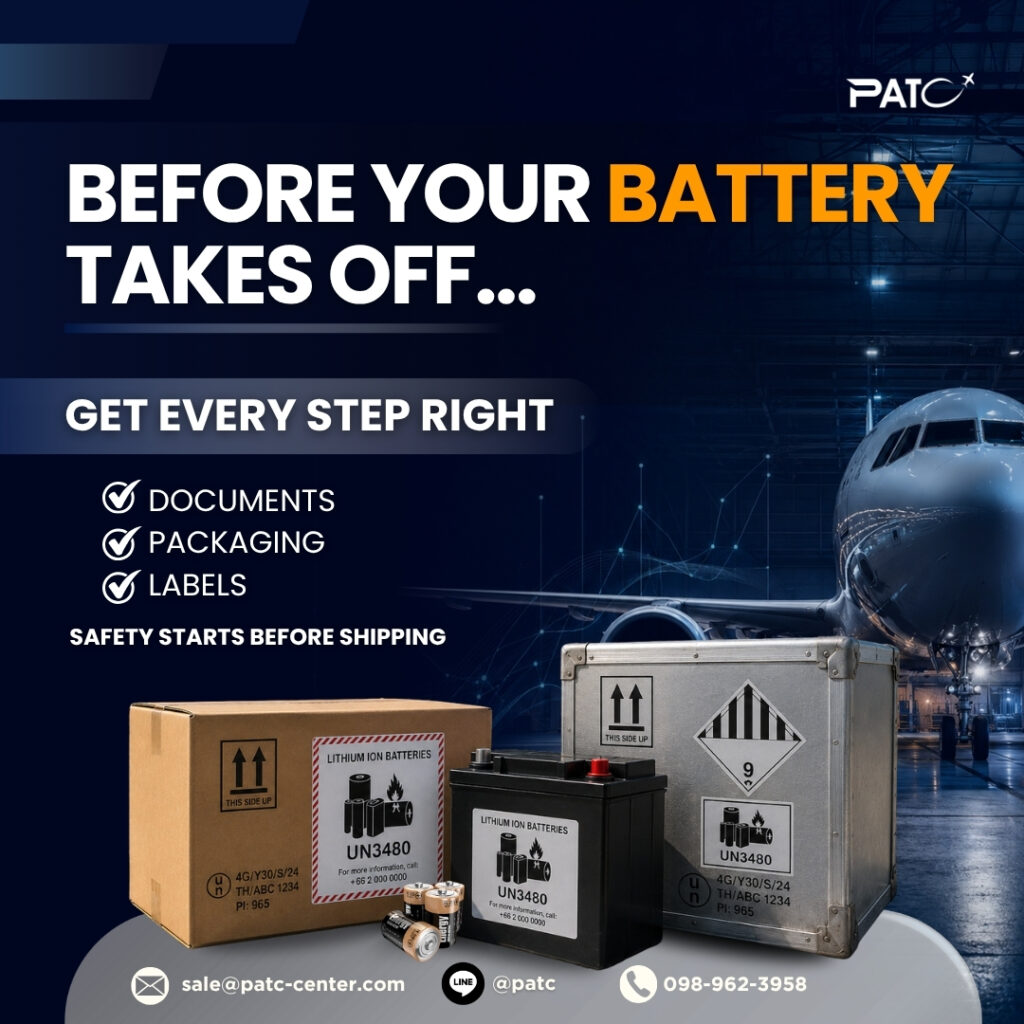
Transporting lithium batteries by air requires more than simply packing a shipment. Every package must comply with the IATA Dangerous Goods Regulations (DGR) to ensure safety, regulatory compliance, and smooth transportation.
Even a minor mistake in documentation, packaging, or labeling can lead to shipment rejection, costly delays, or increased safety risks during air transport.
Why Proper Battery Shipping Matters
Lithium batteries are classified as Dangerous Goods because they can present fire and thermal risks if they are not prepared, packaged, and declared correctly. For this reason, aviation authorities and airlines require strict compliance with international regulations.
Before every shipment, make sure you verify the following:
- Documentation – Ensure all required shipping documents are complete and accurate.
- Packaging – Use approved packaging that meets the applicable IATA DGR Packing Instructions.
- Labels & Marks – Apply the correct hazard labels, handling labels, and package markings.
Following these essential steps helps reduce operational risks while ensuring your shipment reaches its destination safely and without unnecessary delays.
Learn the International Requirements
Whether you are a Shipper, Freight Forwarder, Cargo Agent, Warehouse Operator, Logistics Professional, or Airline Personnel, understanding the latest IATA Dangerous Goods Regulations (DGR) is essential for handling lithium battery shipments safely and compliantly.
At Pattaya Aviation Training Center (PATC), we provide professional Dangerous Goods training designed to help organizations and individuals develop the knowledge and practical skills required for compliant air cargo operations.
Safety Starts Before Shipping.
For more information about our Dangerous Goods training courses:
📧 Email: sale@patc-center.com
💬 LINE Official: @patc
📞 Tel: +66 98-962-3958